.png?fit=max&auto=format&n=tsMQJyneJ1xquFUo&q=85&s=4d401cc03b547d99b6f75a6bd170c334)
Read-only by design. The Device Monitor collects security-relevant metadata using read-only access. It applies no destructive actions and no invasive controls. See What data is collected.
What Device Management covers
DSALTA Device Management focuses on endpoint security fundamentals:- Disk encryption status
- Antivirus presence
- Screen lock enforcement
- Password manager usage
- Operating system version and device identity
Supported operating systems
Each operating system is evaluated using native system signals and platform-specific checks. The onboarding task detects the employee’s operating system and shows the matching installer and requirements.
How it fits together
1
Device enrollment
Employees install the DSALTA Device Monitor on their device using a secure registration key, delivered as an onboarding task.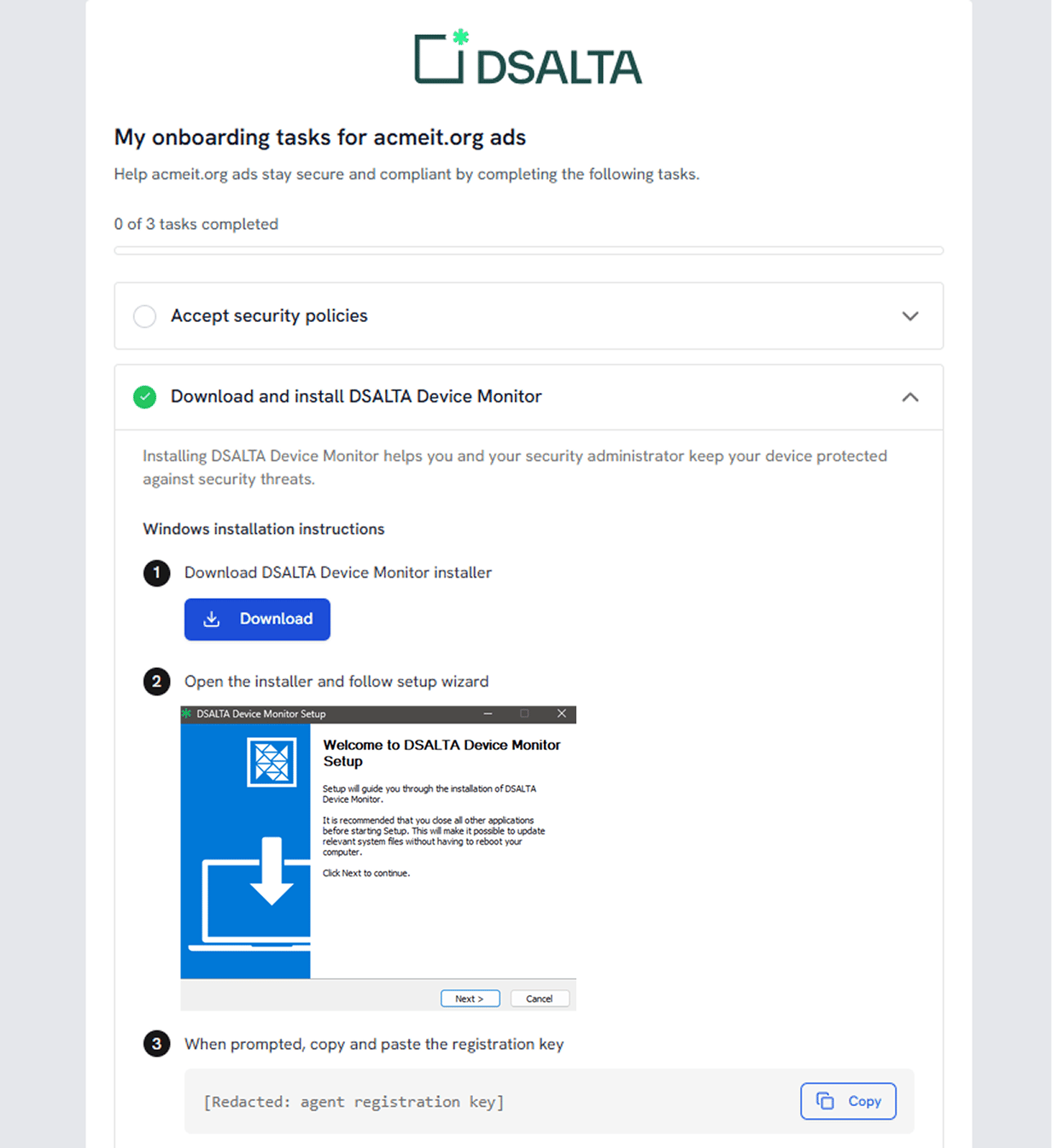
2
Secure activation
The employee pastes the registration key into the Device Monitor, which authenticates the device and links it to their account. See How Device Management works for the full employee walkthrough, including how they sign in.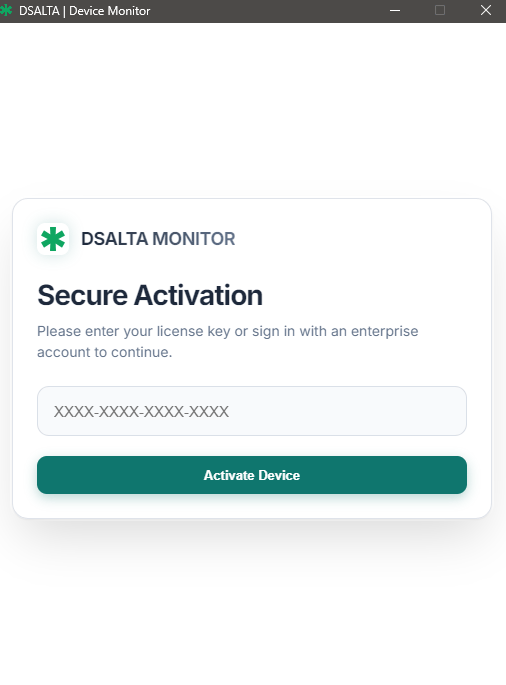
3
Continuous monitoring
DSALTA periodically collects the system-level signals required for security and compliance.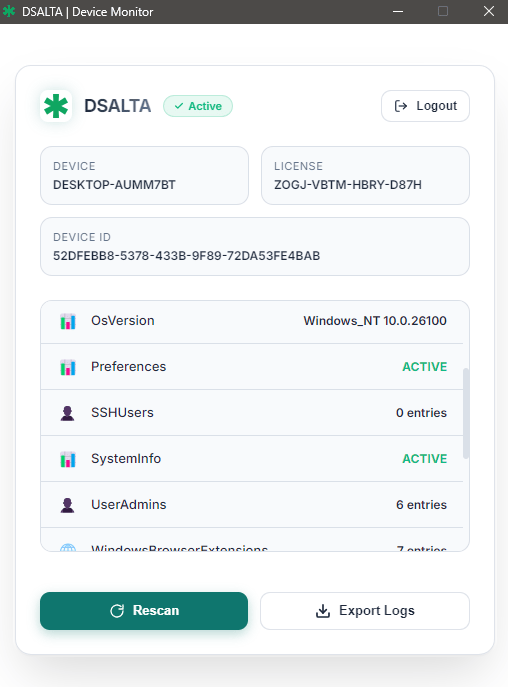
4
Status evaluation
Each device is evaluated against the security checks, and every control is marked Pass or Fail independently.
5
Visibility and action
Admins see risks, status gaps, and remediation needs on the Devices page.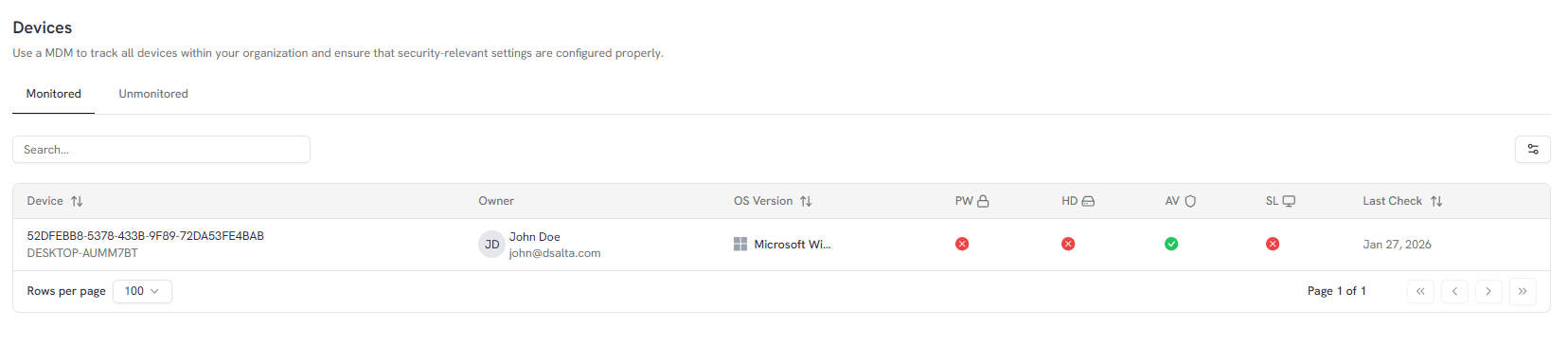
Where device checks appear
Results are visible at two levels:- Device level — the Devices page in the Data Library, on the Monitored tab.
- User level — the employee’s profile on the People page.